Concord neighborhood · 24/7
Monument Corridor: fourplexes and garden blocks where one building runs on one keyway
Monument Boulevard and Detroit Avenue, with the fourplexes and two-story garden blocks on the streets between them. Buzzer panels at the courtyard gate, unit numbers that ignore the street, carports at the rear, and the largest share of renters in the city. Eighteen minutes from the plaza, and a lot of this work lands after six.
18 min
Avg. arrival
$89
Service call
24/7
Availability
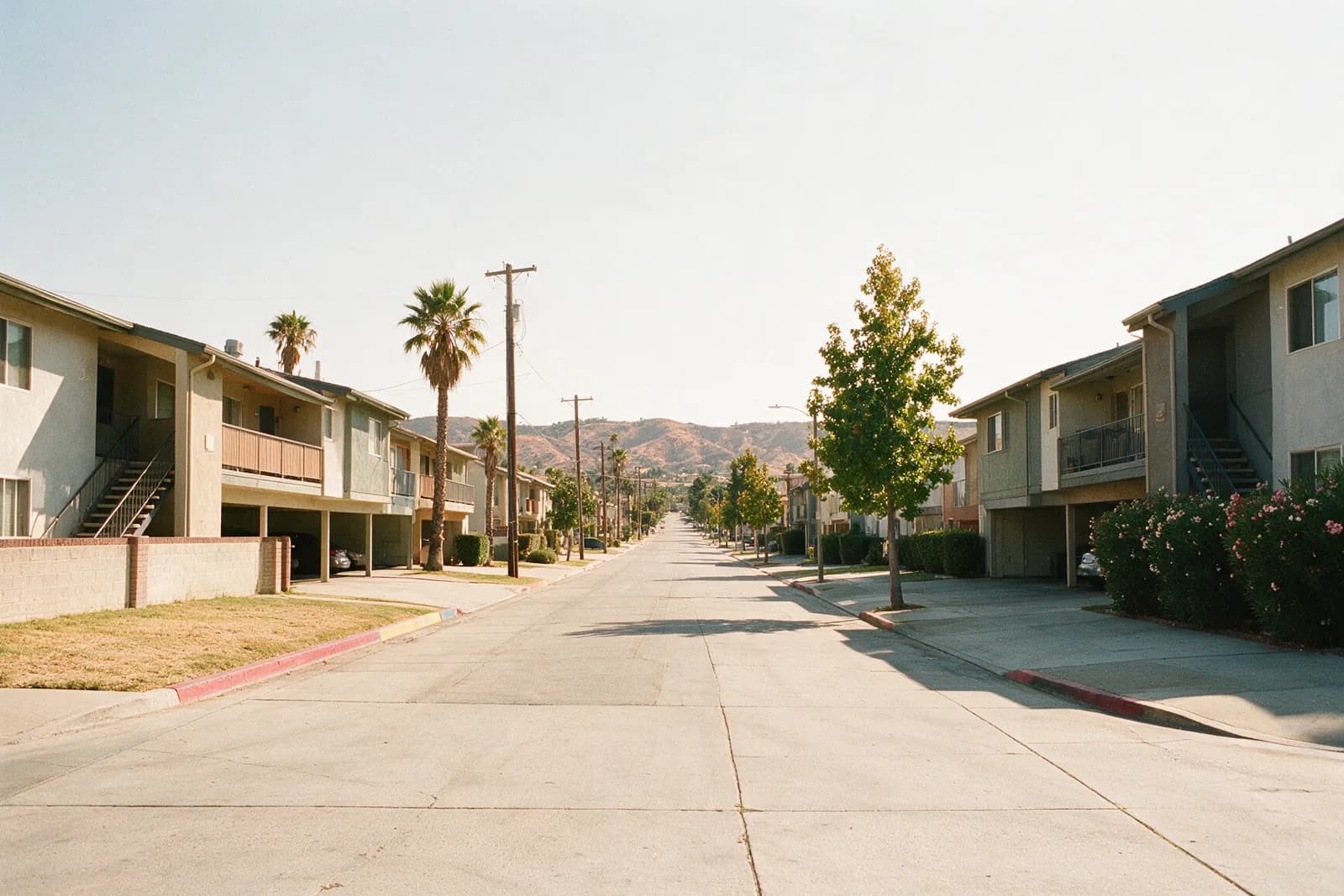
The apartment blocks along this corridor went up in the same years as the tract houses around them and were bought the same way: one order, one supplier, one hardware finish for the whole property. That shows up as a building where twenty-four unit doors sit in the same keyway family, differing only in how each cylinder was pinned, with a later deadbolt added above the knob at a height that repeats from door to door. It is why a figure can be given on the call from a unit number alone. A rekey is $25 to $40 per cylinder, and when three units turn over in the same week they are quoted as one figure with the visit inside it rather than three separate calls to the same parking lot. The openings that get forgotten belong to the building and not to anyone in it: the courtyard gate, the laundry room, the mail alcove. Those go into the count while the figure is being set, so nothing is discovered later.
For the people living here the common call is simpler and it arrives at seven in the evening. A unit lockout is $115 to $195, and where a courtyard gate has to be passed on the way it is inside that figure rather than counted as a second door. Most of these buildings now run a panel that dials a cell phone instead of a buzzer wired into the apartment, which works until the phone holding the gate code is the phone shut inside the unit. Say on the call whether the gate opens, and give the building letter as well as the unit number, since the numbering on these properties rarely follows the street. Proof of address is asked for at the door, and it is asked in the same words of a tenant as of an owner.
Two more things come off this corridor steadily. Unit doors that have stopped catching are usually a frame that has moved rather than a lock that has failed, and shimming the strike back into line is both cheaper and faster than a replacement; where the case really is worn through, a lock replacement is $112 to $285. And where a door has been forced, repair is $159 to $399, taking in the jamb, the strike and the cylinder that absorbed the hit, with the parts itemized on the receipt in language a manager or an insurer can use without a translator. Calls are answered 24/7. Evening work from 8pm carries $40 and overnight from midnight carries $75, both already inside the figure said on the call.
Give the building letter and the unit number, then say whether the trouble is your own door, the courtyard gate, or a common door like the laundry room. If the gate panel rings to a phone rather than to the apartment, mention it, because that decides how the technician reaches you.
FAQ
Asked on the way to the phone
How long from the plaza to my address?+
Twenty-three minutes is the citywide average, measured from Todos Santos Plaza. Downtown and the plaza run about 16 minutes, the Monument corridor 18, Sun Terrace and Meadow Homes 19, Bates Avenue and the yards 23, Ygnacio Valley 23, North Concord and Willow Pass 23, Dana Estates and Holbrook Heights 24, Clayton Valley and Crystyl Ranch 26. Outside the city line: Pacheco 19, Pleasant Hill 23, Walnut Creek 24, Martinez 28, Clayton 29. The hill streets and the far towns are honestly the slowest and you hear that on the call rather than standing on a porch wondering. The window that arrives by text is drawn from where the van actually is, not from the average.
Why can you price my door over the phone when nobody has seen it?+
Because of when this city was built. Concord went from 6,953 people in 1950 to 85,164 in 1970, and the houses went up in one push between 1955 and 1968, tract by tract, fitted with the same few locks. Two bore sizes, one backset, four finishes covers most of the housing stock, and a great deal of that hardware is still on the doors. Name the street and the door is largely known: what fits it, what the strike looks like, what usually fails on it. That is what turns a guess into a figure you can hear before anyone gets in the van.
So why is there a range at all?+
Three things move a job inside its range. First, which tract the door came from, because a 1957 street and a 1967 street were not built with the same hardware. Second, what has been changed on it since: an added deadbolt, a replaced cylinder, a security screen, a slider bar, a strike somebody moved. Third, which hour you are calling in. Once you have said the street, the door and the time, the figure is a single number, not a range, and it stays that number on the receipt.
Will the lock still work after you open it?+
Almost never, and never without your agreement. Picks, decoders and bypass tools cover builder deadbolts across the tracts, apartment cylinders on Monument and Detroit, aluminum storefronts on Salvio and Grant, patio sliders, most car doors and most safes, and the lock goes back to work afterward. The exceptions are a high-security cylinder, one already smashed, or one welded around a snapped blade. When that is your door you hear it plainly, you hear what would replace it, and you choose. The figure does not move either way.
What does the figure already hold, and what could move it?+
The $89 visit, the labor, whatever hardware goes on the door, and the night hour when there is one, all rolled into the number you hear. Steps up from the street in Holbrook Heights, a buzzer lobby on Monument Boulevard, a latched side gate in Crystyl Ranch, a gated yard off Port Chicago Highway: none of that moves it. The only thing that can add is extra work you decide on while the technician is standing there, such as putting the garage side door on the same key while the front is open. That gets a figure of its own, said out loud, and it starts when you say yes.
Do Saturdays, holidays or the small hours cost more?+
Saturday, Sunday and holidays cost what a Tuesday afternoon costs. Only the clock changes anything: $40 between 8pm and midnight, $75 between midnight and 7am. Both are folded in before you hear a figure, so nothing appears later. A house lockout that is $115 in daylight comes back as $155 at eleven at night and $190 at four in the morning, all of it inside the same published range, and the receipt matches what you agreed to.
I rent on the Monument corridor. Do I need my landlord before you open my own door?+
No. This corridor has the largest share of renters in the city and a tenant is the customer, not a complication. For a lockout, bring photo ID showing the address, or ID plus something on your phone that ties you to the unit: a lease page, a utility bill, a rent receipt, addressed mail. Give the building and the unit number on the call, because a buzzer panel with forty buttons is no help to a van circling Detroit Avenue. Nobody is contacted about you, and no owner has to approve putting you back into the place you pay for.
I own rentals and rekey between tenants. How does that work?+
Cylinders are counted per door at $25 to $40 each, and the whole property comes back as one figure that already holds the visit, not a visit charge with cylinders piled on top of it. A fourplex with front and back doors is eight cylinders and one number. Each unit can sit on its own key with a single management key over the set, so you carry one key instead of a ring. Old keys come back in labeled bags to check against whatever the outgoing tenant handed over, and the receipt lists every door by unit. A manager acting for an owner elsewhere can approve the work with a management agreement or a text from the owner.
Our house still has its original sixties hardware. Does all of it have to come off?+
Usually not. Streets through Sun Terrace, Meadow Homes and the Ygnacio Valley spine are full of builder knob sets and later deadbolts that still turn well and only need repinning so keys from three owners ago stop working. Three things genuinely earn replacing: a cylinder with real wear in it, a bolt whose throw no longer reaches the frame, and a strike screwed into trim instead of the stud behind, which is the single detail that decides whether a door survives a kick. Which of the three applies to yours gets said before anything is unscrewed.
Do you work the yards on the east side, and the lots around the mall and BART?+
Both. Man-doors beside roll-ups on Bates Avenue, warehouse offices off Solano Way and Port Chicago Highway, yard gates along the Port Chicago side, storefronts and restaurant back doors around the plaza on Salvio and Grant. Early starts are normal there, because a shop that cannot open at seven loses a shift rather than a morning. On the car side, a good share of the work sits in the Sun Valley Mall lots, the Concord and North Concord park-and-ride rows, the Diablo Valley College lots and the Willows. Name the lot and give a row, a level or the color of the car. A gated garage needs somebody who can get the van through the gate. None of it changes the figure.
24/7 — nights, weekends & holidays
Give the street, hear the figure, and the door gets opened the way it was built to be opened
Concord, Pleasant Hill, Pacheco, Clayton, Martinez and Walnut Creek, 24/7, holidays included. Say what the door is doing and one figure comes back with the $89 visit already inside it and the hour already counted. The lock is opened without damage wherever it can be, and the receipt shows what the call showed, whether the deed is in your name or the lease is.