Why the cylinder is being changed at all
Three versions of this call come from the blocks around the plaza. A tenant has taken a space on Salvio or Grant and wants the previous tenant's keys to stop working before opening week. Somebody has left the payroll and their key did not come back. Or a key has gone missing off a ring and nobody can say where. In all three cases the work itself is small: on an aluminum storefront door the cylinder is a threaded barrel held by one screw, and changing or repinning it is quick.
The decisions are the part worth slowing down for, because a cylinder changed without them gets changed again in six weeks. Six questions cover it, and they are all answerable before anyone drives over.
Who has a key today, honestly counted
Start with a count nobody wants to do. The previous tenant, and whoever they gave keys to over five years. The landlord or the property manager. The cleaning crew, which is often a contractor with staff who change. An alarm company. Two former employees. A neighbor who watered the plants during a closure. The count matters because it decides whether a rekey is a formality or the actual reason for the visit.
Then decide, going forward, how many keys should exist and who holds each. Three is a common answer for a small shop: one owner, one held by whoever opens, one spare kept off-site rather than in the drawer under the register. Copies are what unravel this, and if key control genuinely matters, a restricted keyway is the arrangement to ask about, because blanks for it are not on the rack at a hardware counter. It costs more per cylinder and it is the only version of this that actually holds over years.
What the lease says the landlord keeps
Nearly every commercial lease on these blocks obliges the tenant to give the landlord a key, and many require notice before locks are changed at all. That is not an obstacle so much as a step: change the cylinder, deliver a key, note it in an email so both sides have the same record. Skipping it produces the argument that turns up at the end of a tenancy, and occasionally a landlord who has the cylinder changed back.
There is a second thing in the lease worth reading in the same sitting. In many of the older buildings around the plaza, the shop's front door is not the only door involved. There is a shared rear entry from the service alley, a shared gate, sometimes a stair to apartments above. Those are the building's doors and the owner controls them, so a tenant asking for a rear alley cylinder to be changed will be asked who is entitled to that door. Getting that answered before the visit is what turns a wasted trip into a job done.
What cylinder the door actually takes
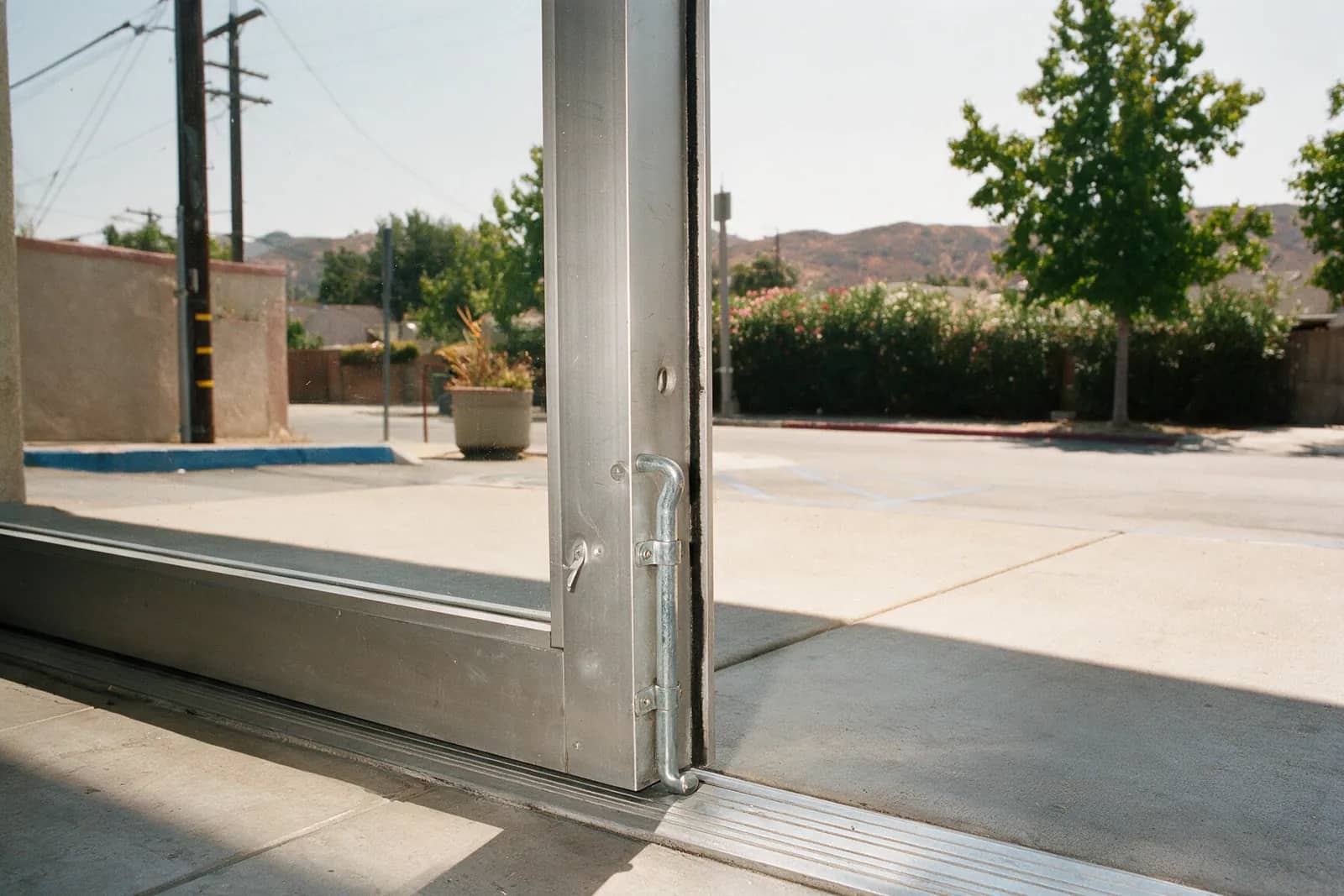
An aluminum storefront door is not a house door with a bigger frame. The narrow stile carries a latch or a bolt made for that stile, and the cylinder that operates it is usually a mortise cylinder: a threaded barrel with a cam on the back, in a length matched to the stile, held by a single set screw in the edge. Three things have to be right. The length, because a cylinder standing proud is a target and one sitting too deep will not reach. The cam, because the cam shape and its orientation are what actually move the lock, and the wrong cam turns a key that does nothing. And the keyway, if the cylinder is joining a set that already exists.
It is also worth knowing which lock is in the door. A deadlatch, which is the springy latch with a small plunger beside it, is what most shop doors have and it is what allows the door to be opened by key from outside and pushed from inside. A hook bolt is a separate deadlock, used on pairs of doors and on doors with no frame to catch a latch. Some doors have both, which means two cylinders, and the count of cylinders is what settles the figure. Storefront door locks are $149 to $435 per door, and repinning an existing cylinder rather than replacing it is $25 to $40 each.
The inside face of the door, and the back of the shop
The inside gets one firm rule. While the shop is open and there are people in it, that door has to let them out without a key. A cylinder on the inside face of a front door, or a thumbturn that has been removed and replaced with a key cylinder because a tenant worried about a smashed pane, is the arrangement that gets a business written up and is the arrangement that gets people hurt. If the concern is somebody reaching through broken glass, the answer is on the glass and on the outside trim, not a key on the inside.
The rear door into the service alley deserves its own decision. Most small shops run everything through the front, and then the back door only needs to be secure and to open from inside. If deliveries do come through the back, that cylinder joins the shop key set, and it is worth knowing that a rear cylinder is the one most often forgotten at a staff change. Whatever is decided, keep a note of which doors are on which key. A shop with a front deadlatch, a front hook bolt and a rear door has three cylinders, and three cylinders on two keys is fine as long as somebody can say which is which.
Timing, and the figures
Two practical notes on timing around the plaza. Do it before opening rather than during trade, because the door will be off duty for part of the visit and a shop door on Salvio is not a door you want propped at two in the afternoon. And if the alarm has a door contact tied to the lock or the shop runs on a schedule, know who holds the alarm code before the cylinder changes, since being able to unlock a door you cannot disarm is its own kind of evening.
Storefront door locks are $149 to $435 per door. Repinning existing cylinders is $25 to $40 each, counted on the call so one figure comes back for the shop. A business shut out of its own premises is a business lockout at $125 to $225, opened without harm to the door. A door forced overnight and found at opening is $159 to $399 for the frame, the latch and the cylinder together, written up plainly enough for an insurer. Downtown is about sixteen minutes from Todos Santos Plaza, within the sixteen to thirty-one minutes that covers the city. The Known Door: one figure said on the call, holding the visit, the labor and the parts; the same figure on the receipt whatever the technician finds in the stile; the lock opened without damage first, with a drill only on your agreement and never at a higher figure; card or tap at the door, an itemized receipt by email, and a written line naming the doors and the work for a landlord, a manager or an insurer. Calls are answered 24/7, with $40 inside the figure between 8pm and midnight and $75 between midnight and 7am, which lifts a late call within its range rather than over it.
Quick answers
What does it cost to change the lock on a storefront door near the plaza?+
Storefront door locks are $149 to $435 per door with the $89 visit already inside the figure. Where only the cylinder needs to change, repinning is $25 to $40 each, and the cylinders get counted on the call so one figure comes back for the shop.
Do I have to tell my landlord before changing the cylinder?+
Almost certainly yes. Most commercial leases on these blocks require the landlord to hold a key and many require notice before locks change. Change the cylinder, hand over a key, and note it in an email so both sides hold the same record. Shared rear and alley doors belong to the building and are authorized by the owner.
Can we put a key cylinder on the inside of the shop door?+
Not while people are inside. That door has to open without a key from within, and a key on the inside face is what gets a business written up. If the worry is somebody reaching through broken glass, the answer belongs on the glass and on the outside trim instead.
Need it handled rather than read about?
(925) 421-2295More guides